Most property owners ask one question: "How much should insurance cost?" The better question is: "What is the carrier seeing that makes my building expensive, and what can I change before renewal?"
Commercial property insurance pricing usually starts with total insured value, construction, occupancy, protection class, location, deductible, prior claims, and carrier appetite. Then the underwriter adjusts for the details that make your property harder or easier to insure. A clean apartment building and a gas station with older underground tanks are both commercial property, but they are priced like completely different risks.
Apartment Building Insurance Cost Guide
Apartment buildings are priced around habitability exposure, tenant traffic, fire protection, roof and plumbing condition, loss of rents, and whether the property is in a wildfire, wind, hail, freeze, or earthquake-sensitive area.
| Major cost driver | Why it changes the premium |
|---|---|
| Number of units | More units mean more tenants, more foot traffic, more slip-and-fall exposure, and a larger loss of rents exposure after a covered claim. |
| Construction and age | Frame buildings, older electrical systems, old plumbing, and older roofs usually cost more to insure than newer masonry or fire-resistive buildings. |
| Location | California wildfire, Texas wind and hail, Illinois freeze, urban crime, and local fire response all affect carrier appetite and deductible structure. |
| Tenant and management history | Habitability complaints, prior fires, water losses, crime incidents, poor maintenance records, and weak lease documentation can push accounts into higher-priced markets. |
Coverage apartment owners should review
Building coverage
Insure to realistic replacement cost, not purchase price. Undervalued buildings can trigger coinsurance penalties and leave the owner short after a major fire.
General liability
Covers bodily injury and property damage claims from tenants, guests, vendors, and the public. Stairways, parking lots, pools, balconies, and common areas matter.
Loss of rents
Replaces rental income when a covered loss makes units uninhabitable. Owners should check the waiting period and restoration period.
Ordinance or law
Critical for older buildings. Code upgrades after a loss can cost more than the visible damage.
How apartment owners can lower insurance cost
- Prepare a clean rent roll, statement of values, roof age, updates, photos, and loss runs before shopping.
- Document plumbing, electrical, HVAC, roof, alarm, camera, and sprinkler upgrades.
- Fix trip hazards, lighting issues, balcony concerns, pool fencing, and known habitability problems before renewal.
- Compare deductible options, but do not accept a deductible that creates a cash-flow problem after a claim.
Hotel and Motel Insurance Cost Guide
Hotels are operational businesses, not just buildings. Underwriters look at occupancy, franchise status, room count, pools, restaurants, liquor, crime, housekeeping, guest safety, and whether the property is coastal, urban, or exposed to catastrophe risk.
| Major cost driver | Why it changes the premium |
|---|---|
| Hotel type | Limited-service, full-service, motel, extended stay, boutique, franchise, and independent hotels have different liability and property profiles. |
| Guest exposure | Room count, occupancy rate, parking lot traffic, pools, fitness centers, balconies, elevators, and exterior corridors all affect liability pricing. |
| Food and liquor | Restaurants, bars, happy hour, banquet operations, and liquor sales can require liquor liability and broader general liability terms. |
| Building protection | Sprinklers, alarms, security cameras, lighting, key-card systems, roof condition, and fire response drive property and liability appetite. |
Coverage hotel owners should review
Property and business income
Hotels need enough business income coverage to survive after a fire, water loss, storm, or shutdown during repair.
General liability
Guest injuries, parking lot incidents, pool claims, bed bug allegations, and premises security lawsuits can be severe.
Equipment breakdown
Boilers, HVAC, elevators, refrigeration, laundry equipment, and electrical panels can interrupt operations fast.
Liquor liability
If alcohol is sold or served, do not assume standard liability covers it. Confirm limits, exclusions, and state requirements.
How hotel owners can lower insurance cost
- Provide franchise inspection reports, security procedures, maintenance logs, and updated building photos.
- Separate restaurant, bar, valet, shuttle, pool, and event exposures clearly so carriers do not assume the worst.
- Show proof of monitored alarms, cameras, lighting, key-card controls, and staff incident procedures.
- Shop early. Hospitality risks can take longer to place, especially in coastal or high-claim areas.
Gas Station Insurance Cost Guide
Gas stations are expensive to insure because they combine property, general liability, fuel operations, underground storage tanks, environmental liability, convenience store exposure, crime, auto traffic, and sometimes liquor, cooking, car wash, or repair operations.
| Major cost driver | Why it changes the premium |
|---|---|
| Underground storage tanks | Tank age, material, capacity, leak detection, compliance history, and prior environmental issues are among the biggest underwriting factors. |
| Fuel and store operations | Fuel volume, pump count, canopy condition, c-store sales, liquor, lottery, ATM, cooking, and hours of operation affect both property and liability pricing. |
| Environmental liability | Fuel leaks can create cleanup costs, third-party claims, regulatory problems, and long-tail losses that standard property policies do not handle. |
| Security and claims | 24-hour operations, crime, robbery, poor lighting, prior slip-and-fall claims, and weak camera coverage can narrow carrier options. |
Coverage gas station owners should review
Commercial property
Covers building, pumps, canopy, signage, store equipment, inventory, and business personal property subject to policy terms.
General liability
Protects against customer injury and property damage claims. Auto traffic and fuel operations make premises safety essential.
Pollution liability
Usually needs separate review. Confirm underground tank coverage, cleanup costs, third-party bodily injury, property damage, and regulatory defense.
Crime and equipment breakdown
Cash-heavy operations, ATMs, food equipment, refrigeration, and pumps create exposures that should not be ignored.
How gas station owners can lower insurance cost
- Keep tank compliance records, inspection reports, leak detection logs, and spill prevention details organized.
- Document canopy, pump, electrical, roof, alarm, camera, lighting, and bollard upgrades.
- Clarify whether liquor, cooking, car wash, auto repair, propane, ATM, and lottery operations exist.
- Do not wait until renewal week. Gas station markets can require more underwriting time than ordinary retail properties.
Warehouse Insurance Cost Guide
Warehouse insurance depends on what is stored, who owns the goods, whether the building is owner-occupied or tenant-occupied, the fire load, racking height, sprinklers, trucks, loading docks, and whether warehouse legal liability is needed.
| Major cost driver | Why it changes the premium |
|---|---|
| Commodity stored | Paper, plastics, tires, chemicals, batteries, electronics, food, and ordinary dry goods are not treated the same by underwriters. |
| Fire protection | Sprinklers, alarm monitoring, fire walls, protection class, racking height, and housekeeping can make or break carrier appetite. |
| Warehouse legal liability | If the business stores property belonging to others, standard property coverage may not answer the way the owner expects. |
| Truck and dock exposure | Loading docks, forklifts, yard traffic, third-party drivers, and contractual requirements can change liability needs. |
Coverage warehouse owners should review
Building and business personal property
Make sure values include the building, tenant improvements, equipment, racking, inventory, and owned business property.
Warehouse legal liability
Protects against liability for damage to customers' goods when the warehouse operator is legally responsible.
Business income
A serious fire or water loss can stop operations, interrupt leases, and disrupt customer contracts.
Equipment breakdown
Electrical panels, forklifts, refrigeration, conveyor systems, and mechanical equipment may need additional coverage.
How warehouse owners can lower insurance cost
- Prepare a clear occupancy description and list exactly what commodities are stored.
- Provide sprinkler details, alarm certificates, racking height, fire inspection reports, and housekeeping photos.
- Separate landlord building risk from tenant operational risk where possible.
- Review contracts to confirm insurance limits, waiver of subrogation, additional insured requirements, and legal liability obligations.
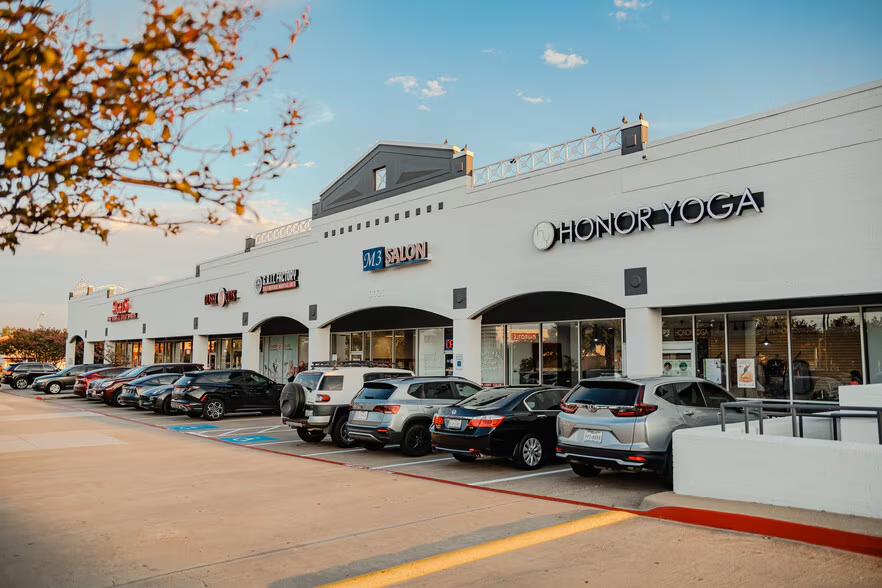
Strip Mall and Retail Center Insurance Cost Guide
Strip malls are priced around the building, tenant mix, parking lot exposure, signage, roof condition, restaurant or liquor tenants, vacancy, crime, fire protection, and whether leases transfer enough insurance responsibility to tenants.
| Major cost driver | Why it changes the premium |
|---|---|
| Tenant mix | Restaurants, liquor stores, bars, laundromats, smoke shops, gyms, auto tenants, and vacant units can increase underwriting scrutiny. |
| Parking lot and common areas | Trip hazards, lighting, security, landscaping, sidewalks, and traffic flow create liability exposure for the property owner. |
| Roof and building condition | Flat roofs, older HVAC units, water intrusion, prior hail damage, and deferred maintenance can raise property premiums. |
| Lease insurance requirements | Weak leases can leave the landlord paying for losses that should have been insured by tenants. |
Coverage retail center owners should review
Commercial property
Building, signs, exterior lighting, glass, HVAC, tenant improvements, and landlord-owned property need accurate values.
General liability
Parking lots, sidewalks, common areas, and high-traffic tenants create recurring premises liability exposure.
Loss of rents
If a covered loss shuts down part of the center, lost rental income can matter as much as the repair bill.
Ordinance or law
Older centers may face expensive code upgrades after a partial loss.
How strip mall owners can lower insurance cost
- Collect tenant certificates of insurance and confirm additional insured status before renewal.
- Document roof work, HVAC updates, parking lot repairs, lighting upgrades, camera systems, and fire protection.
- Explain tenant operations clearly. A sandwich shop, liquor store, smoke shop, and nightclub do not create the same risk.
- Keep vacancy details current. Carriers price unknown or vacant units more cautiously.
Want us to price your property properly?
Send the address, current policy, loss runs, building values, and renewal date. We will shop the market and explain what is driving the price in plain English.
Call Johal Insurance Brokers