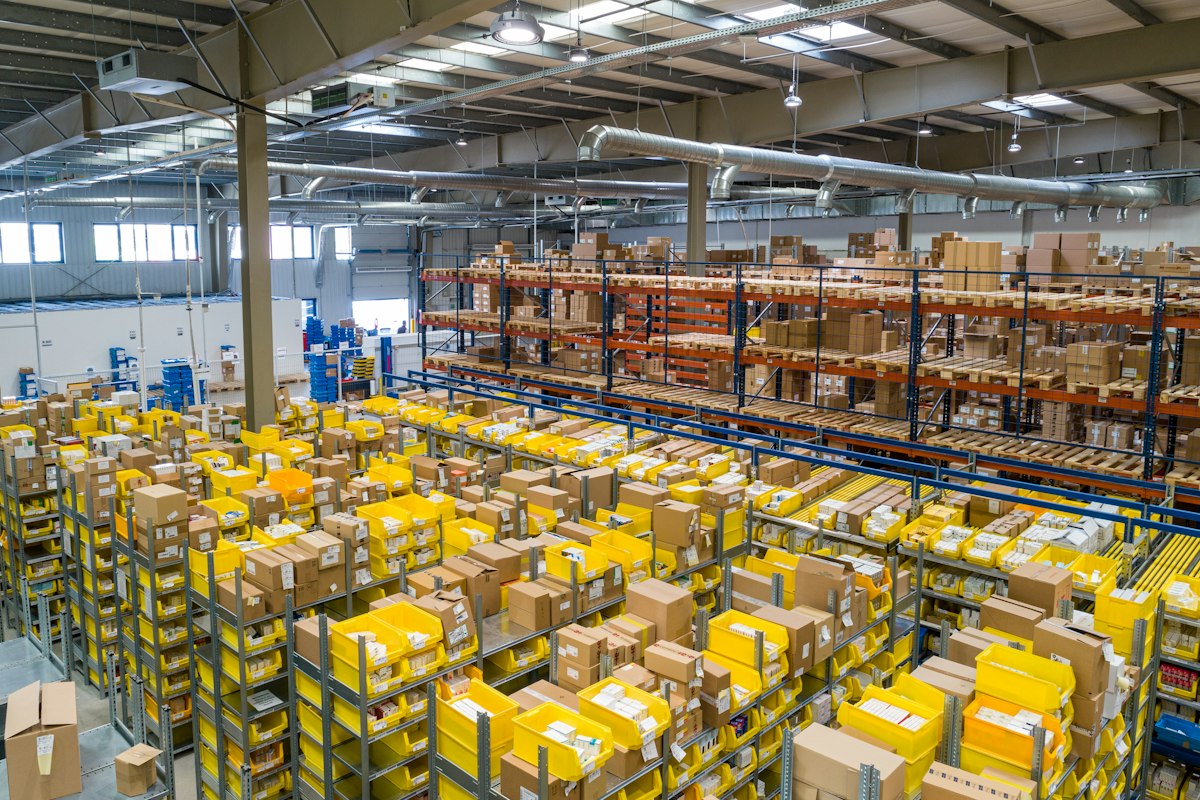
Warehouse and industrial properties represent some of the most complex risks in commercial real estate. With high property values, specialized equipment, diverse tenant operations, and unique liability exposures, a standard commercial property policy rarely provides adequate protection.
In 2026, the warehouse insurance market is stabilizing after years of volatile rate increases. Carriers are becoming more competitive, but underwriting scrutiny has never been higher. Property owners who understand their coverage needs and present their risk effectively are securing better terms than those who simply renew year after year.
This guide covers everything warehouse owners need to know about insurance in 2026 — from essential coverages and common gaps to cost factors and strategies for securing the best rates.
Why Warehouse Insurance Is Different
Warehouses aren't just big empty buildings. They're dynamic operational facilities with risks that evolve based on what's stored inside, how it's handled, and who is doing the work. Unlike an apartment building or retail center, a warehouse's risk profile can change dramatically from one tenant to the next.
The numbers tell the story: warehouses face outsized exposure compared to other commercial property types. A fire in a fully racked warehouse with high-piled combustible storage can reach catastrophic proportions quickly. Forklift accidents damage racking systems that cost hundreds of thousands to replace. And tenant operations ranging from light assembly to chemical storage create liability exposures that standard policies often exclude.
Essential Coverages for Warehouse Properties
A comprehensive warehouse insurance program includes multiple coverage lines working together. Here's what every warehouse owner needs:
1. Building and Property Coverage
This is the foundation of your policy — protection for the warehouse structure itself, including:
- Building structure — Walls, roof, foundation, and permanent fixtures
- Building improvements — Tenant improvements you've funded or that stay with the building
- Outdoor property — Loading docks, fencing, lighting, and signage
- Detached structures — Maintenance buildings, guard stations, or separate storage
For warehouses, replacement cost coverage is essential. Actual cash value policies that deduct depreciation can leave you hundreds of thousands short when replacing racking systems, specialized flooring, or modern loading dock equipment.
2. Business Personal Property (Contents)
This covers property you own inside the warehouse — not tenant inventory. For warehouse owners, this typically includes:
- Racking and shelving systems — Often the single most valuable component after the building itself
- Material handling equipment — Forklifts, pallet jacks, conveyors (if owned)
- Office furniture and equipment — Desks, computers, phones in administrative areas
- Maintenance equipment — Tools, cleaning supplies, spare parts
Many warehouse owners underestimate the value of their racking systems. A fully racked 100,000 sq ft warehouse can easily have $500,000 to $1.5M in racking alone. If you're only insuring the building shell, you're significantly underinsured. Get a professional appraisal of your racking value and include it in your Statement of Values.
3. Equipment Breakdown Coverage
Standard property policies cover damage from external perils like fire and wind. They don't cover mechanical or electrical failure. Equipment breakdown (formerly boiler & machinery) covers:
- Electrical panel failures
- HVAC system breakdowns
- Refrigeration equipment failure (critical for cold storage)
- Fire suppression system malfunctions
- Power surge damage to equipment
For warehouses with climate-controlled storage or extensive electrical systems, this coverage is essential. A single electrical panel failure can cost $50,000+ to repair and cause business interruption losses on top.
4. Business Income and Extra Expense
If a covered loss forces your warehouse to close temporarily, business income coverage replaces lost rental revenue. Extra expense coverage pays for costs to minimize the interruption — like renting temporary space or expediting repairs.
For warehouses, the restoration period is critical. A major fire in a fully racked facility can take 18–24 months to fully rebuild and re-rack. Your business income limit needs to cover:
- Lost rental income for the full restoration period
- Continued operating expenses (property taxes, insurance, some maintenance)
- Tenant relocation costs if your lease requires it
- Extra expenses to expedite reopening
5. General Liability
Warehouse operations create unique liability exposures:
- Premises liability — Slip-and-fall injuries, falling objects, loading dock accidents
- Operations liability — Damage to tenant property caused by your maintenance staff
- Products liability — If you provide any packaging or handling services
- Completed operations — Liability for work performed by contractors you hire
Warehouse liability limits should start at $1M per occurrence / $2M aggregate minimum. Properties with high-traffic loading docks, multiple tenants, or hazardous materials storage need higher limits — often $2M/$4M or more.
6. Inland Marine Coverage
Standard property policies cover property at a specific location. Inland marine covers property in transit or at temporary locations. For warehouses, this matters if you:
- Move equipment between multiple facilities
- Store tenant property off-site temporarily
- Have mobile racking or equipment that moves between locations
- Provide any transportation services for tenants
The 2026 Warehouse Insurance Market
After years of double-digit rate increases, the commercial property insurance market is showing signs of stabilization in 2026. Here's what warehouse owners need to know:
Rate Environment
Premiums are flattening for well-maintained properties with clean loss histories. We're seeing:
- Preferred risks — Flat to +5% increases for modern construction, sprinklered buildings, strong tenants
- Standard risks — 5–10% increases for average properties with no major issues
- Challenging risks — 10–20%+ increases for older buildings, high-hazard tenants, or loss-prone accounts
Carriers are competing more aggressively for quality warehouse business. If you haven't shopped your coverage in 2+ years, 2026 is the year to do it.
Underwriting Focus Areas
Carriers are scrutinizing these factors more closely than ever:
| Factor | What Underwriters Want | Impact on Rates |
|---|---|---|
| Tenant Mix | Low-hazard tenants (storage, distribution) vs. high-hazard (manufacturing, chemicals) | High-hazard tenants can increase rates 25–100% |
| Racking Systems | Engineered systems with proper anchoring, load capacity signage, protection from forklifts | Non-engineered or damaged racking can trigger exclusions |
| Fire Protection | ESFR sprinklers for high-piled storage, adequate water supply, clear aisle spacing | Sprinklered buildings save 15–40% on property premium |
| Building Age/Condition | Updated electrical, roof less than 20 years, no deferred maintenance | Older buildings pay 20–50% more |
| Security | Monitored alarms, video surveillance, controlled access, lighting | Strong security can reduce rates 5–15% |
Common Coverage Gaps in Warehouse Policies
We review hundreds of warehouse insurance policies each year. These are the gaps we find most often:
1. Inadequate Racking Coverage
The gap: The policy covers "building" but excludes or limits "contents" — and racking is considered contents. Or the racking value is severely understated.
The risk: A fire destroys $800,000 in racking, but your policy only covers $200,000 in contents. You're $600,000 short.
The fix: Get a professional racking appraisal. Ensure your contents limit covers full replacement cost of all racking, equipment, and improvements.
2. Tenant Operations Exclusions
The gap: Your liability policy excludes certain tenant operations (auto repair, manufacturing, chemical storage) that you didn't disclose or didn't realize were excluded.
The risk: A tenant's operation causes a fire or injury. The claim is denied because their business class was excluded from your policy.
The fix: Disclose all tenant operations to your broker. Review lease requirements for insurance. Consider requiring tenants to carry their own liability coverage with you as additional insured.
3. Ordinance & Law Gaps
The gap: Standard policies cover rebuilding to the original structure's specs, not current building codes. After a major loss, you must rebuild to today's codes — which can add 20–40% to costs.
The risk: Your warehouse was built in 1995. After a fire, current code requires upgraded electrical, fire suppression, and ADA compliance. The additional cost is $400,000. Your policy pays $0 toward code upgrades.
The fix: Add Ordinance & Law coverage with limits equal to 25–50% of your building value. In areas with stringent codes (like Chicago), consider the maximum available limit.
4. Insufficient Business Income Limits
The gap: Business income coverage with a 12-month restoration period and limits based on current rent — not the 18–24 months it actually takes to rebuild a warehouse.
The risk: A fire destroys your warehouse in month 6. Rebuilding takes 20 months. Your coverage runs out at month 12. You have 8 months of lost rent with no coverage.
The fix: Extend the restoration period to 24 or 36 months. Calculate your limit based on actual rental income plus operating expenses for the full restoration timeline.
5. Pollution Liability Exclusions
The gap: Standard liability policies exclude pollution — and the definition of "pollution" is broader than you think. Fuel spills, refrigerant leaks, and even dust can trigger exclusions.
The risk: A forklift punctures a heating oil tank. The spill contaminates soil and groundwater. Cleanup costs exceed $500,000. Your liability policy denies the claim as a "pollution event."
The fix: If you store fuel, chemicals, or refrigerants, add pollution liability coverage. For high-risk operations, consider a standalone environmental policy.
State-Specific Considerations
Warehouse insurance varies significantly by state. Here's what to know in the markets we serve:
California Warehouse Insurance
California warehouses face unique challenges:
- Earthquake exposure — Standard policies exclude earthquake. In high-seismic zones, standalone earthquake coverage is essential. Premiums vary dramatically based on construction type, soil conditions, and proximity to fault lines.
- Wildfire zones — Warehouses in or near wildfire-designated areas face limited carrier options and higher premiums. The California FAIR Plan may be necessary for properties in high-risk zones.
- Proposition 103 — Rate increases for admitted carriers require state approval, which can delay renewals. Surplus lines carriers offer faster placement but no CIGA protection.
- Title 24 compliance — Rebuilding after a loss must meet current energy efficiency standards. Ordinance & Law coverage is critical.
Texas Warehouse Insurance
Texas presents different challenges for warehouse owners:
- Wind and hail — The dominant perils for Texas warehouses. Properties along the Gulf Coast may need separate wind coverage through TWIA.
- Hail damage — North Texas warehouses face severe hail risk. Some carriers now offer cosmetic damage exclusions or hail-specific deductibles.
- Named storm deductibles — Coastal properties face percentage-based deductibles (2–5% of building value) for hurricane damage.
- Tornado exposure — North Texas and Tornado Alley properties need to ensure wind coverage includes tornado damage without special limitations.
Illinois Warehouse Insurance
Illinois warehouse considerations include:
- Cook County liability — Nuclear verdicts in Cook County drive up liability costs. Higher limits and umbrella coverage are essential for properties in this jurisdiction.
- Freeze damage — Burst pipes from freezing temperatures are a leading cause of warehouse claims. Maintain minimum 55°F temperatures and consider adding freeze coverage endorsements.
- Chicago building code — Stringent code requirements make Ordinance & Law coverage especially important for city properties.
- Portfolio discounts — Illinois carriers offer aggressive multi-property discounts. If you own 3+ warehouses, packaging them can save 10–20%.
How to Lower Your Warehouse Insurance Premiums
While you can't control market cycles, you can take steps to secure better rates:
1. Invest in Fire Protection
ESFR (Early Suppression Fast Response) sprinkler systems are the gold standard for warehouses. They can reduce premiums 15–40% and may be the difference between carrier acceptance and declination for high-piled storage.
2. Maintain Clean Loss Runs
Five years of minimal claims qualifies you for preferred pricing tiers. Consider self-insuring small losses (under $10,000) to preserve your loss history.
3. Improve Security
Monitored alarms, video surveillance, controlled access, and perimeter lighting all earn premium credits. Document your security measures and share them with underwriters.
4. Update Building Systems
Roof replacements, electrical upgrades, and plumbing updates can significantly reduce rates. A new roof alone can cut premiums 10–20%.
5. Shop Multiple Carriers
The warehouse insurance market is competitive in 2026. Independent brokers can access 20+ carriers and find the best fit for your specific property. Don't auto-renew without comparing options.
6. Optimize Your Deductible
Higher deductibles mean lower premiums. If you can comfortably absorb a $25,000 or $50,000 loss, increasing your deductible can save thousands annually.
Need Warehouse Insurance?
We specialize in industrial properties across California, Texas, and Illinois. Get a same-day quote from multiple A-rated carriers.
Get Your Free Quote →Frequently Asked Questions
Warehouse insurance premiums typically range from $0.15 to $0.45 per $100 of insured value depending on location, construction type, occupancy, and claims history. A $5M warehouse in a low-risk area might pay $7,500–$22,500 annually. Properties with high-hazard tenants, older construction, or in catastrophe-prone zones will see higher rates.
Warehouse insurance typically covers: building structure and improvements, business personal property (racking, equipment, inventory), business income/loss of rents, equipment breakdown, general liability, and outdoor property. Additional coverages like inland marine, cyber liability, and pollution liability may be needed depending on tenant operations.
Yes. Multi-tenant warehouses require careful attention to tenant operations and lease requirements. Each tenant's business affects your overall risk profile. You need tenant liability coverage, additional insured endorsements for lease compliance, and clear documentation of each tenant's operations. Some tenant types (manufacturing, chemical storage, auto repair) may require specialized coverage or surplus lines placement.
Racking is typically considered contents/business personal property, not part of the building. This is a critical distinction — if you only insure the building shell, your racking may be uninsured. Ensure your contents limit includes full replacement cost of all racking systems, which can easily reach $500K–$1.5M+ in a fully racked facility.
For warehouses, we recommend a 24–36 month restoration period. A major fire in a fully racked facility can take 18–24 months to rebuild and re-rack. A 12-month period — common in standard policies — often leaves warehouse owners without coverage for the final months of reconstruction.